
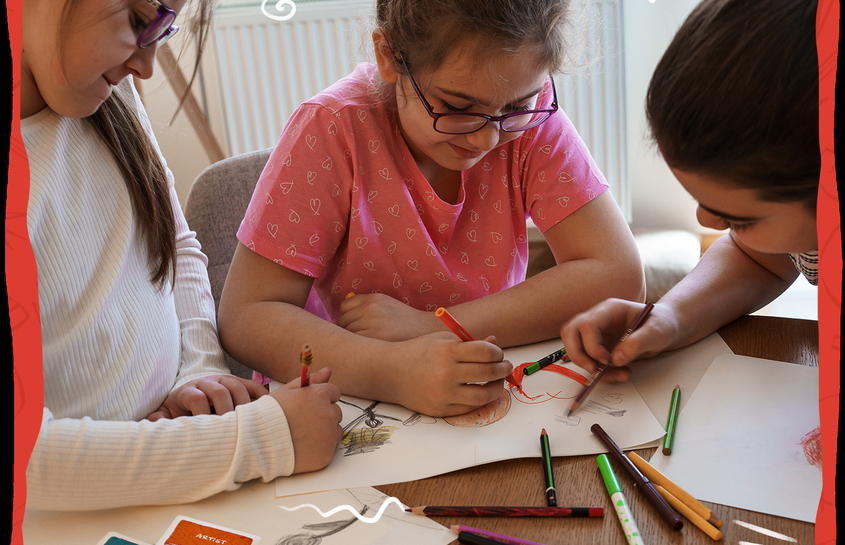
Classroom creativity does not always need a huge setup.
Sometimes students just need a pencil, a page, a clear starting point, and permission to make something a little strange.
That is where quick classroom drawing activities can help. They give students a simple way to warm up, loosen up, practice creative thinking, and start making marks before the blank page has time to become intimidating.
These activities are easy to use at the start of art class, during sketchbook time, for early finishers, after a transition, or any time your classroom needs a low-pressure creative reset.

Why Classroom Drawing Warm-Ups Work
Drawing warm-ups are helpful because they make the first step smaller.
Instead of asking students to create a finished artwork right away, a warm-up gives them a short, playful task. That removes pressure and helps them move into creative mode more naturally.
A good warm-up can also support confidence. Students who freeze when asked to “draw anything” often do better when the starting point is already chosen for them.
They Lower Pressure
Students can begin with a quick idea instead of worrying about making something perfect.
They Build Routine
A familiar warm-up helps students transition into art time faster.
They Spark Ideas
A small prompt can lead to surprising characters, scenes, stories, and visual choices.
They Include Everyone
Students do not need advanced skills to participate in a short creative challenge.
Activity 1: The 10-Minute Prompt Draw
This is one of the easiest classroom drawing activities to use again and again.
Give students one prompt and set a timer for ten minutes. Their job is not to finish a masterpiece. Their job is to get the idea onto the page in some form.
The prompt can be silly, specific, mysterious, or totally unexpected. The more unusual it is, the more students have to make creative choices.
The Share the Chaos option is perfect for spreading a creative prompt beyond one table.
Time
10 minutes
Materials
Pencil, paper, sketchbook, or drawing supplies already on hand.
Best For
Warm-ups, transitions, early finishers, and quick creative resets.
Teacher Tip
Remind students that speed matters more than perfection for this activity.

Need quick classroom prompts?
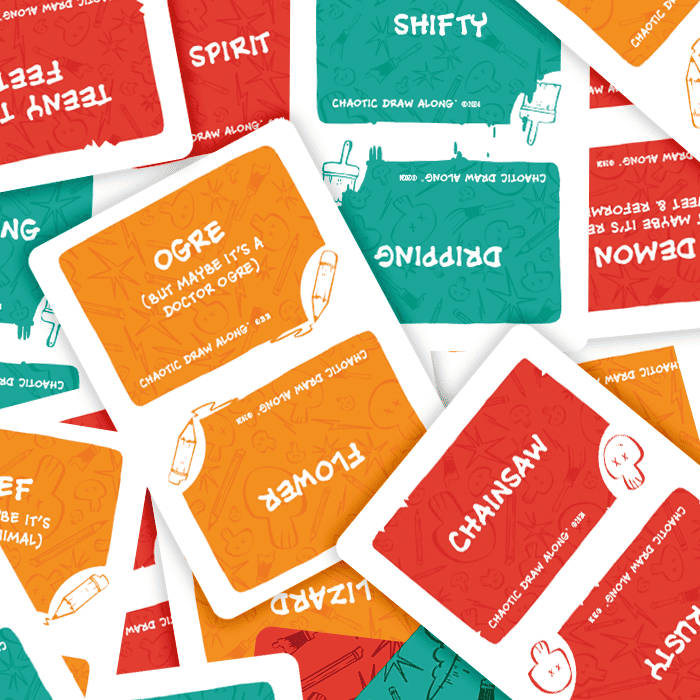
The Prompt Card Deck gives students a starting point for sketchbook warm-ups, early finisher activities, art club challenges, and low-pressure classroom drawing.
Activity 2: Same Prompt, Different Drawings
This activity is great for showing students that creativity is not about finding one correct answer.
Give the entire class the same drawing prompt via Chaotic Draw Along Prompt Card Deck. Then let everyone interpret it in their own way.
When the drawings are finished, students can walk around and notice how many different versions came from the same starting point. One prompt might become a funny character, a dramatic scene, a comic panel, a tiny creature, or a completely unexplainable situation.
That comparison is the lesson.

- What details did different students add?
- Did anyone turn the prompt into a character?
- Did anyone turn it into a scene or story?
- Which drawings made the prompt feel funny, dramatic, strange, or mysterious?
- How did the same idea change from person to person?
Activity 3: Finish the Weird Drawing
Start each student with a small mark, shape, or unfinished doodle. It might be a squiggle, a blob, a line, a pair of eyes, or a random shape in the corner of the page.
The task is simple: turn it into something.
This works well because students do not begin with a completely blank page. There is already something there, even if that something is ridiculous.
Blob Creature
Turn a random blob into a creature with personality.
Squiggle Scene
Use one squiggly line as the beginning of a place, object, or action.
Mystery Eyes
Start with only two eyes and build the rest of the character around them.
Wrong Object
Turn a normal object into something that definitely should not exist.
Activity 4: Pass the Sketchbook
This is a fun group activity for art clubs, small groups, or classroom tables.
One student starts a drawing for two minutes. Then they pass the page to the next student, who adds something new. After a few rounds, the drawing becomes a collaborative creative mess in the best possible way.
You can make it more structured by giving each round a rule.
The Chaotic Draw Along Sketchbook works well for this because it gives every tiny idea somewhere to land!

- Round 1: Draw the main character.
- Round 2: Add a setting.
- Round 3: Add a problem.
- Round 4: Add one strange object.
- Round 5: Add a speech bubble, sound effect, or final detail.
Activity 5: Early Finisher Prompt Station
Early finishers can be tricky. Some students complete their work quickly and need something meaningful to do while others are still focused.
A prompt station gives them a simple next step without interrupting the rest of the class.
Set up a small area with prompt cards, blank paper, sketchbooks, pencils, and a few simple instructions. Students can pick a prompt and complete a quick drawing while the main lesson continues.
- Keep the instructions short.
- Make the activity independent.
- Use prompts that can be finished quickly.
- Let students add drawings to a sketchbook or class folder.
- Rotate prompts weekly so the station stays fresh.
- Keep it low-pressure so it feels like extra creative time, not extra work.

Give classroom ideas a place to land
A sketchbook gives students space for warm-ups, prompt drawings, rough ideas, weird experiments, and creative practice without the pressure of a final project.
Activity 6: Draw It Three Ways
This activity helps students think beyond their first idea.
Give students one prompt or subject and ask them to draw it three different ways. Each version should change something important: mood, size, style, setting, expression, or story.
For example, if the subject is a dragon, students might draw:
- A tiny nervous dragon hiding under a chair.
- A fancy dragon arriving late to a party.
- A sleepy dragon who accidentally became a school mascot.
This is a useful exercise because students learn that the first idea is not the only idea. Sometimes the second or third version is where the drawing gets more interesting.
Activity 7: One-Minute Character Challenge
This is a fast warm-up for days when the class needs energy.
Students have one minute to create a character based on a simple prompt. The drawing can be rough. The goal is speed, expression, and personality.
After the timer ends, ask students to add one label or sentence that explains the character.

- A robot who is scared of balloons.
- A frog with a very important job.
- A sandwich that knows too much.
- A tiny wizard with a huge problem.
- A cat who is pretending to be professional.
- A cloud that is having a dramatic day.
How to Keep Classroom Drawing Activities Low-Pressure
The most important part of a classroom drawing warm-up is the tone.
If students feel like every drawing will be judged, they may freeze. If the warm-up feels playful and temporary, they are more likely to try something unexpected.
Keep the rules simple. Keep the time short. Celebrate unusual ideas. Remind students that warm-ups are for thinking, not proving.
- Warm-ups do not need to be perfect.
- Messy ideas are allowed.
- Students can restart if they get stuck.
- Funny drawings count.
- Strange choices are welcome.
- The goal is to begin, not impress everyone.
Final Thought: Make Starting Easier
Classroom drawing activities do not have to be complicated to be useful.
A short prompt, a simple routine, or a quick sketchbook challenge can help students start faster, experiment more freely, and build creative confidence over time.
Some days, the best classroom art idea is not a full lesson. It is a small spark that gets every pencil moving.
Ready to bring more chaos to class?
Use prompt cards, sketchbooks, and simple drawing challenges to turn warm-ups, early finisher time, and classroom creativity into something students actually want to start.

Leave a comment
All comments are moderated before being published.
This site is protected by hCaptcha and the hCaptcha Privacy Policy and Terms of Service apply.