
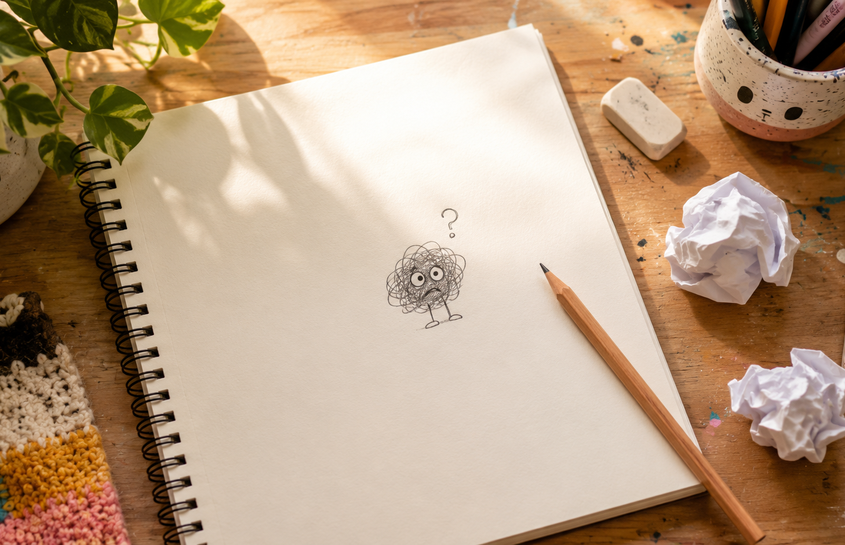
Starting a sketchbook sounds simple until the first blank page starts staring back at you like it has questions.
You might have a fresh sketchbook, a pencil, maybe some good intentions, and then suddenly your brain decides that every first drawing must be meaningful, beautiful, original, and somehow worthy of page one.
That is a lot of pressure for a rectangle of paper.
The good news is that a sketchbook habit does not need to begin with a masterpiece. It can begin with a weird doodle, a five-minute warm-up, a messy idea, or a prompt that makes absolutely no sense until you draw it.
Here is how to start filling your sketchbook without overthinking every page.

First, Stop Treating Your Sketchbook Like a Final Portfolio
A sketchbook is not supposed to be a gallery. It is not a polished book of finished work. It is a place to test ideas, make ugly drawings, repeat yourself, experiment, scribble, warm up, and chase strange little thoughts before they disappear.
The fastest way to ruin a sketchbook habit is to expect every page to look impressive.
Instead, think of your sketchbook as a creative playground. Some pages will be good. Some will be confusing. Some will look like your hand forgot how lines work. That is normal.
Experiments
Try styles, shapes, characters, layouts, and ideas without needing them to become finished art.
Warm-Ups
Use quick drawing exercises to wake your hand up before a bigger creative session.
Bad Drawings
Yes, really. Bad drawings are proof that you are showing up and trying things.
Tiny Ideas
A small doodle today might become a character, comic, painting, lesson, or bigger project later.
Start Smaller Than You Think
One of the best ways to build a sketchbook habit is to make the starting point almost too easy.
Do not begin with “I am going to draw for one hour every day forever.” That sounds noble, but it also sounds like a trap. Start with one small page, one prompt, one five-minute drawing, or even one tiny corner of a page.
The goal is not to fill a sketchbook overnight. The goal is to make drawing feel easy enough to return to.
Draw for 5 Minutes
Set a timer and stop when it ends. You can always continue, but you do not have to.
Use Half a Page
A full blank page can feel dramatic. A small drawing box feels much friendlier.
Repeat One Idea
Draw the same object, creature, or character three different ways.
Keep It Visible
Leave your sketchbook somewhere you will actually see it, not buried under seventeen mystery notebooks.
Use Prompts When Your Brain Has No Ideas

Waiting for inspiration is a very elegant way to not draw.
Drawing prompts make the starting point easier because they give your brain something to react to. Instead of asking, “What should I draw?” you get to ask, “How would I draw that?”
That second question is much easier. It gives you a direction, but it still leaves room for your own style, humor, choices, and creative chaos.
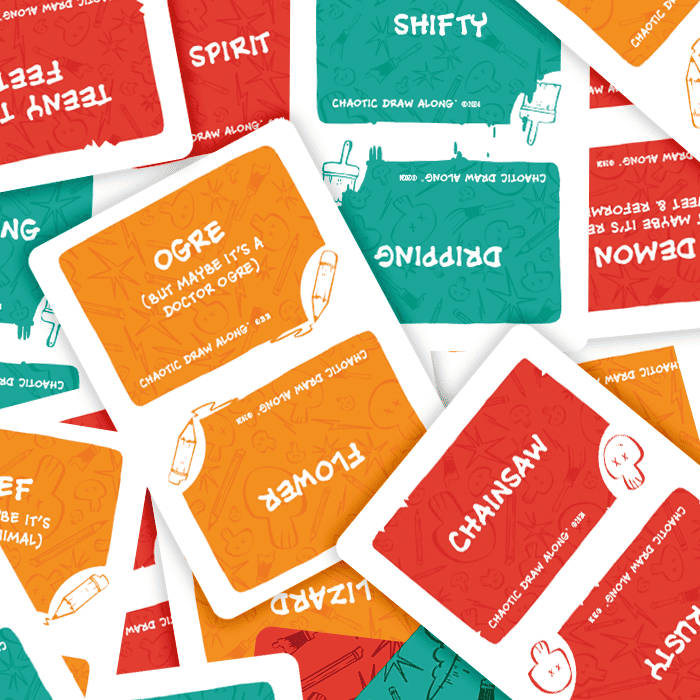
This is where the Chaotic Draw Along Prompt Card Deck is especially useful. Pull a few cards, combine them, and suddenly your blank page has a ridiculous job to do.
- 🐸 Draw a frog who is trying to look professional.
- 🍕 Draw a slice of pizza having an identity crisis.
- 🤖 Draw a robot keeping a very tiny secret.
- 🦝 Draw a raccoon preparing for an important presentation.
- 🧙 Draw a wizard who forgot the spell halfway through.
- 🐙 Draw an octopus trying to organize a very chaotic desk.

Need a sketchbook idea fast?
Pull a Subject, Descriptor, and Chaos card from the Chaotic Draw Along Prompt Card Deck and turn your next blank page into a weird little drawing mission.
Create a Simple Sketchbook Routine
A sketchbook habit becomes easier when you do not have to reinvent the process every time.
You do not need a strict routine, but having a loose pattern helps. It gives you a familiar place to start, especially on days when your creative brain feels like it has wandered into another room and closed the door.
Try this simple weekly format:
- Monday: Draw one quick prompt.
- Tuesday: Redraw yesterday’s idea in a new style.
- Wednesday: Fill one page with tiny object doodles.
- Thursday: Create a character from a random shape.
- Friday: Choose one sketch and add more details.
You can follow that routine exactly, change it completely, or ignore it whenever life gets loud. The point is not perfection. The point is having a simple path back to the page.
Keep One Sketchbook for Messy Ideas

Some people stop using a sketchbook because they accidentally make it too precious.
The paper feels too nice. The cover feels too clean. The first few drawings look good, so now every drawing has to look good. Suddenly the sketchbook becomes a museum instead of a place to play.
One fix is to choose a sketchbook that is specifically for messy practice. This is where you draw badly on purpose, test strange ideas, write notes, tape things in, and make pages that nobody else needs to understand.
The Chaotic Draw Along Sketchbook is made for exactly that kind of creative use: warm-ups, doodles, experiments, prompt drawings, and the strange little ideas that need somewhere to land.

Give your weird ideas somewhere to live
Use the Chaotic Draw Along Sketchbook for warm-ups, prompt drawings, daily doodles, character ideas, messy experiments, and creative practice that does not need to be perfect.
Try Different Types of Sketchbook Pages
A sketchbook does not have to be one finished drawing after another. In fact, it probably should not be.
Mixing up the type of page keeps the habit interesting. It also lowers the pressure because not every page has the same job.
Prompt Page
Pull a prompt and draw one response, no matter how weird or simple it becomes.
Warm-Up Page
Fill the page with quick shapes, characters, faces, objects, patterns, or tiny scenes.
Idea Dump
Write and sketch every little idea that pops into your head without judging it.
Redraw Page
Take an old drawing and draw it again with one change: bigger, sillier, scarier, cuter, faster, stranger.
Use a Two-Sketchbook System
Sometimes one sketchbook is not enough because different creative moods need different kinds of space.
One sketchbook can be your everyday messy book. The other can be for cleaner drawings, favorite prompt ideas, longer projects, or pages you want to revisit later.
This is where a bundle can make sense, especially if you are trying to build a consistent habit. The Black & Red Sketchbook Bundle gives you two places to work: one for rough creative chaos and one for the ideas you want to keep building.
For anyone who wants matching sketchbooks, extra pages, or a backup book ready to go, the Red Super Awesome Sketchbook 2-Pack is another easy way to stay stocked for daily drawing, classroom use, family activities, or creative practice.
Do Not Wait Until You Feel Inspired

Inspiration is great when it shows up, but it is not a reliable scheduling partner.
A sketchbook habit works better when you make drawing easy to begin even when you feel tired, stuck, bored, distracted, or creatively empty. That does not mean forcing yourself to make great work. It means giving yourself a small, low-pressure way back into drawing.
Sometimes that is one prompt. Sometimes it is one tiny doodle. Sometimes it is drawing a grumpy frog in the corner of a page and calling it a day.
That still counts.
Quick Sketchbook Habit Checklist
When you are trying to make sketchbooking part of your routine, keep the setup simple.
- Choose a sketchbook that feels fun to use.
- Keep your pencil, pen, or marker nearby.
- Start with five minutes instead of waiting for a perfect long session.
- Use drawing prompts when you do not know what to draw.
- Let messy pages exist without apologizing for them.
- Return to the page even after you miss a day, week, or month.
Final Thought: Your Sketchbook Is Allowed to Be Weird
The best sketchbook habit is one you actually want to come back to.
That means it should feel playful, useful, low-pressure, and a little unpredictable. Fill it with warm-ups, prompt drawings, tiny characters, unfinished scenes, strange notes, half-good ideas, and drawings that make you laugh for no clear reason.
You do not need to know exactly where the habit is going. You just need to open the sketchbook and start.
Ready to start filling pages?
Grab a Chaotic Draw Along Sketchbook, pull a few prompts, and start building a sketchbook habit that is messy, fun, weird, and actually easy to return to.

Leave a comment
All comments are moderated before being published.
This site is protected by hCaptcha and the hCaptcha Privacy Policy and Terms of Service apply.